
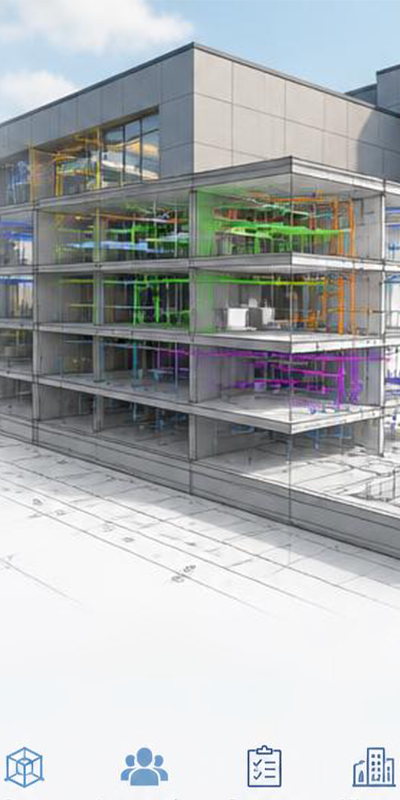
The era of paper drawings in medical construction is fading away. An increasing number of hospitals and medical centers in Russia are being designed using Building Information Modeling (BIM) technologies: instead of a set of disconnected plans, a single digital twin of the building is created, containing data on architecture, structures, engineering systems, equipment, and work schedules.
Regulatory Framework: BIM Becomes the Industry Standard
The transition to digital modeling in Russia is enshrined at the state level. The following codes of practice are in effect: SP 331.1325800.2017, SP 333.1325800.2017, and SP 328.1325800.2017, regulating the formation of an information model at all stages of the facility’s life cycle. In 2025–2026, GOST standards for the implementation of BIM technologies in construction and a digital modeling standard for outpatient clinics were approved, and the entire regulatory system includes dozens of GOST R and SP standards in the field of information modeling.
The market responds to regulatory requirements with steady growth: the share of developers using information modeling technologies reached 49% in 2026 (44% the year before), while the share of domestic software in construction design has grown from 1.5% to 20% over five years.
Practical Advantages of BIM in Medical Center Construction
Medical buildings are among the most complex facilities: dozens of specialized rooms, heavy equipment (MRI, X-ray, and surgical installations), strict sanitary standards, and extensive engineering systems. A digital twin allows all of this to be accounted for before breaking ground on site:
- Design accuracy — collisions between utilities and structures are identified in the model, not during construction;
- Layout optimization — modeling patient flows, staff movements, and medical waste logistics;
- Participant coordination — architects, engineers, builders, and clients work in a single information environment;
- Cost and schedule reduction — according to estimates by the Ministry of Construction of Russia, the use of BIM reduces costs at the design and construction stages by up to 20%;
- Support throughout the entire life cycle — the model is used during operation, maintenance, and building reconstruction.
Prospects: From Digital Twin to “Smart” Hospital
A BIM model becomes the foundation for intelligent building management systems: monitoring engineering networks, predicting failures, and dispatching. Despite objective challenges — the cost of software and specialist training — the industry is confidently moving toward a “smart” hospital format, where the digital twin accompanies the facility from concept to decommissioning.
For clients of medical facilities, choosing a contractor with BIM design competencies today is not about following trends, but a prerequisite for a predictable budget, adherence to schedules, and high quality of the future medical center.
Information sources
https://www.tadviser.ru/
https://implmed.ru/